
Agenda
Times are subject to change.
Pick up your badge, grab some breakfast and network with your peers!
Pick up your badge, grab some breakfast and network with your peers!
Welcome to Government Efficiency Summit.
Welcome to Government Efficiency Summit.

Frank Konkel
Editor-in-ChiefGovExec
The new administration brought with it new policies and new expectations for agencies to modernize. In this session, we’ll hear from agency leaders using old-school managerial savvy and newly available acquisition tools to undertake massive modernization efforts.
This keynote will explore how these policies are being put into practice, including where investments are paying off, where tradeoffs are unavoidable, and how leaders are deciding what to modernize, what to scale, and what to stop. Our keynote speaker will also reveal how incremental changes can contribute to a broader, organization-wide efficiency.
The new administration brought with it new policies and new expectations for agencies to modernize. In this session, we’ll hear from agency leaders using old-school managerial savvy and newly available acquisition tools to undertake massive modernization efforts.
Read MoreUnderwriter

In this session, we’ll hear from chief information officers and chief artificial intelligence officers who are using AI to deliver results and modernize mission execution. They’ll provide a blueprint for how others across government can follow suit.
In this session, we’ll hear from chief information officers and chief artificial intelligence officers who are using AI to deliver results and modernize mission execution. They’ll provide a blueprint for how others across government can follow suit.
Frank Konkel
Editor-in-ChiefGovExec
In this session, we’ll hear from top GSA officials about how their agencies are working together to carry out the administration’s priorities around technology, acquisition, and AI. We’ll discuss efforts across GSA to better deliver technology for federal partners while saving money, and how the federal CIO is looking to create change at scale across the government.
In this session, we’ll hear from top GSA officials about how their agencies are working together to carry out the administration’s priorities around technology, acquisition, and AI. We’ll discuss efforts across GSA to better deliver technology for federal partners while saving money, and how the federal CIO is looking to create change at scale across the government.

Greg Barbaccia
Federal Chief Information OfficerOMB
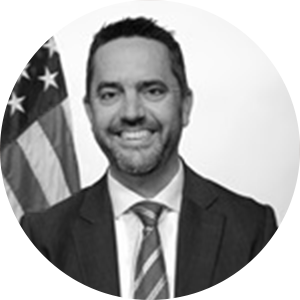
Mike Lynch
Deputy AdministratorGSA
Frank Konkel
Editor-in-ChiefGovExec
Underwriter

Sponsored by Google Public Sector
Sponsored by Google Public Sector
Underwriter


Will Richardson
Senior Sales Engineering Director, Public SectorAbnormal AI
States are often the proving ground for government initiatives like efficiency. In Iowa, leaders have reorganized departments and reduced the number of agencies, creating a smaller, more concentrated government focused on core functions. Meanwhile, Maryland has felt the ripple effects of federal efficiency measures, including impacts on its budget and local economies.
In this session, speakers will take a close look at how efficiency initiatives are taking shape at the state level. They’ll share successes, unpack obstacles, and offer practical guidance on turning federal directives into actionable strategies that deliver on mission and serve both government operations and their communities.
States are often the proving ground for government initiatives like efficiency. In Iowa, leaders have reorganized departments and reduced the number of agencies, creating a smaller, more concentrated government focused on core functions. Meanwhile, Maryland has felt the ripple effects of federal efficiency measures, including impacts on its budget and local economies.
Read More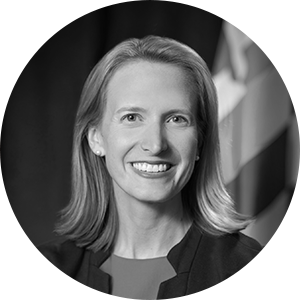
Brooke Lierman
ComptrollerState of Maryland
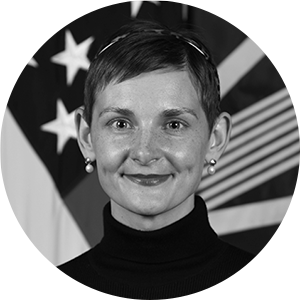
Katie Olson Savage
Secretary of the Department of Information TechnologyState of Maryland

Chris Teale
Managing EditorRoute Fifty
Underwriter



The federal acquisition system is undergoing its most significant transformation in decades. The Revolutionary FAR Overhaul is rewriting the rules of how government buys, while GSA's OneGov and USAi initiatives are consolidating the vendor landscape and reshaping which companies get access to federal agencies. Together, these changes are forcing contractors to rethink how they position themselves, structure their bids, and deliver results. This session will examine what these shifts mean in practice for industry—from small businesses navigating a tighter marketplace to large integrators adapting to new performance expectations—and what contractors need to do now to stay competitive as the rules continue to evolve.
The federal acquisition system is undergoing its most significant transformation in decades. The Revolutionary FAR Overhaul is rewriting the rules of how government buys, while GSA's OneGov and USAi initiatives are consolidating the vendor landscape and reshaping which companies get access to federal agencies. Together, these changes are forcing contractors to rethink how they position themselves, structure their bids, and deliver results. This session will examine what these shifts mean in practice for industry—from small businesses navigating a tighter marketplace to large integrators adapting to new performance expectations—and what contractors need to do now to stay competitive as the rules continue to evolve.
Stephanie Kostro
PresidentProfessional Services Council
Anirudh Kulkarni
CEOCVP

Rocky Thurston
CEODMI
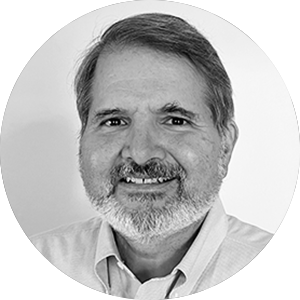
Nick Wakeman
Editor-in-ChiefWashington Technology
Underwriter

As a part-two discussion, GovExec will sit down with GSA to get their perspective and insights on how the OneGov initiative is rewriting the rules of how government buys, the vendor landscape, and more.
As a part-two discussion, GovExec will sit down with GSA to get their perspective and insights on how the OneGov initiative is rewriting the rules of how government buys, the vendor landscape, and more.
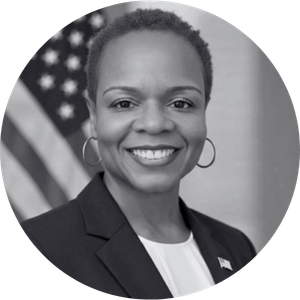
Jeanine Tyson
Service Center Director for the Office of Multiple Award Schedules (MAS), FAS Office of Acquisition Solutions DevelopmentGSA
What does “efficiency” actually mean in government, and how should it be measured? Drawing on new research from The Pew Charitable Trusts, this session will reveal how states are defining, tracking, and achieving efficiency through technology and innovation. From redesigning digital services to using data to guide budget and policy decisions, panelists will cover how states are translating ideas into action, adopting metrics that capture real results, and establishing approaches beyond cutting costs to improve service delivery and long-term impact.
What does “efficiency” actually mean in government, and how should it be measured? Drawing on new research from The Pew Charitable Trusts, this session will reveal how states are defining, tracking, and achieving efficiency through technology and innovation. From redesigning digital services to using data to guide budget and policy decisions, panelists will cover how states are translating ideas into action, adopting metrics that capture real results, and establishing approaches beyond cutting costs to improve service delivery and long-term impact.

Asma Mirza
Chief Performance OfficerState of Maryland

Melissa Maynard
Project Director, Fiscal 50The Pew Charitable Trusts

Bran Shim
Senior AdvisorState of Massachusetts

Kaitlyn Levinson
ReporterRoute Fifty
Many efficiency initiatives start small, from pilots within a single agency to local-level experiments. Success in a controlled environment doesn’t always translate to scaling across multiple agencies, jurisdictions, or programs, which can expose gaps in coordination, consistency, and service quality.
This session will outline how to overcome these obstacles and scale technology while maintaining the initial momentum. Leaders will share how to embed efficiency into day-to-day operations, turning small experiments into systemic change that delivers on mission outcomes.
Many efficiency initiatives start small, from pilots within a single agency to local-level experiments. Success in a controlled environment doesn’t always translate to scaling across multiple agencies, jurisdictions, or programs, which can expose gaps in coordination, consistency, and service quality.
Read MorePromo Image


HTML Content
LEARN MORE ABOUT sponsorship opportunities